
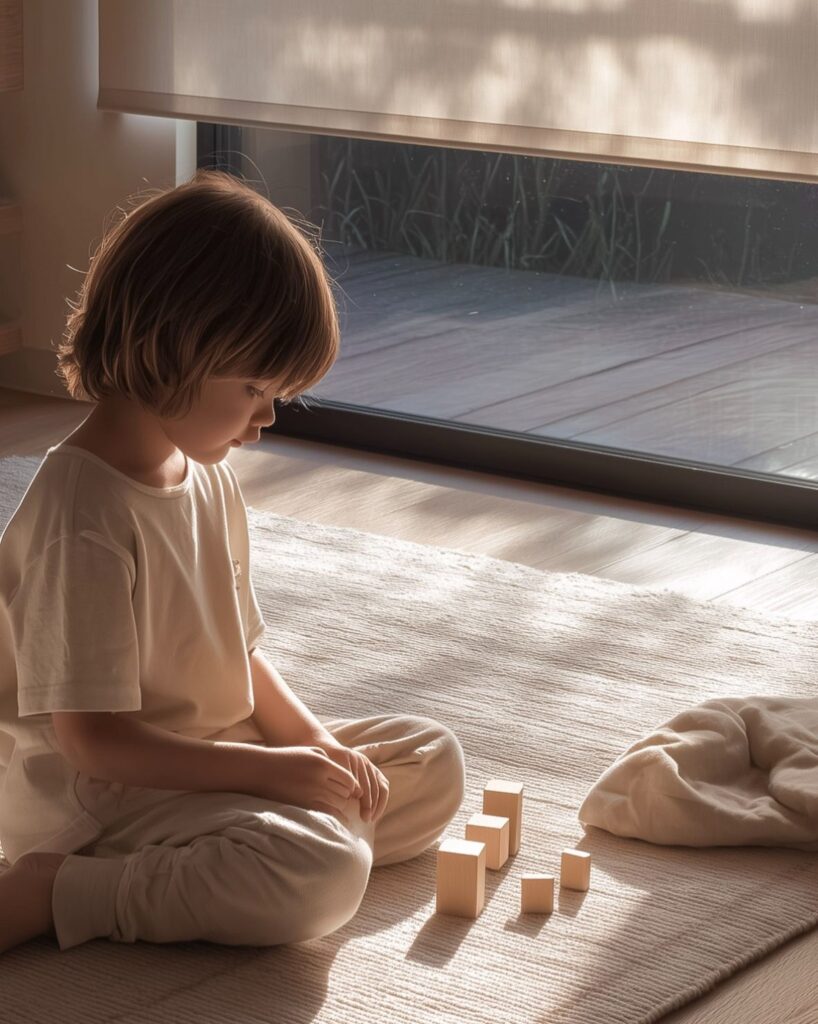
When parents first come across the word DIRFloortime®, it can sound very technical—almost impossible to understand without a professional vocabulary. But at its heart is a deeply human idea: a child develops within relationships, not apart from them.
“Floortime” means more than time spent on the floor. It is about an adult coming down to the child’s level: entering their play and their interests, meeting them as an equal. It says, “I respect you. You matter to me. I want to enjoy being with you.”
These aren’t just nice words. They are the philosophy at the heart of the approach, developed long before modern research confirmed the central role of emotions and relationships in brain development. They are the foundations of DIRFloortime®.
DIR is a model that helps us see the whole child. Not just a diagnosis, a behavior, or whether they speak. We look at where the child is in their development, how their nervous system works, what helps them regulate, and what overwhelms them. How do they experience sound, movement, touch, a change of plans, or another person coming close?
Floortime® gives us practical ways to be with a child so that development can happen almost in passing, through everyday routines and time together. It isn’t literally a “session on the rug,” although sometimes we really are on the floor. It is a way of entering the child’s world, noticing what interests them, joining in, and gradually opening up more possibilities for interaction.
In DIRFloortime®, we don’t begin by asking, “How do we stop this behavior?” We begin elsewhere: “What is the child trying to show us? What feels difficult right now? How much interaction can they manage? Where is there a small opening for us to do something together?”
That doesn’t mean the adult simply follows the child around and does nothing. The adult is very active: watching, tuning in, supporting regulation, bringing emotion into the exchange, and helping the child take the next small step.
But that step must not break the child. It needs to be manageable, alive with feeling, and connected to something the child already cares about. That is when the child’s brain and mind can support development from within. This is why DIRFloortime® is described as gentle, non-coercive, and respectful of everyone involved, including parents and practitioners.
This is what I love about the approach: it gives the child back their dignity and their right to live without coercion. The child stops being a collection of symptoms and things to correct. They become a person again—with intentions, feelings, wishes, their own pace, their own complexity, and the possibility of growing.
And the adult doesn’t become someone who simply runs through exercises. They become someone who is learning to see, wait, respond, support, and guide development through a relationship.
Perhaps most importantly, DIRFloortime® teaches us to do this with enjoyment, without burning out. That matters enormously for parents of children with additional needs. Enjoyment and shared emotion are what hold all the tools and techniques together.
You can explore the approach further in the DIRFloortime® section.
Related reading
- Frequently Asked Questions About DIRFloortime®
- The Evidence for DIRFloortime®: Why It Is More Than “Just Play”
- A Child’s Individual Profile in DIRFloortime®
- Following the Child’s Lead Does Not Mean Doing Nothing
Explore DIRFloortime® · Sessions, training, and supervision
Online DIR 101: register your interest
If you would like a structured introduction to the approach, you can register your interest in an introductory online DIR 101 course taught in Russian. Once we have a group of 5–6 people, we will find a time that works for everyone and schedule the course on the ICDL Institute (USA) website. Registering your interest does not commit you to paying.