
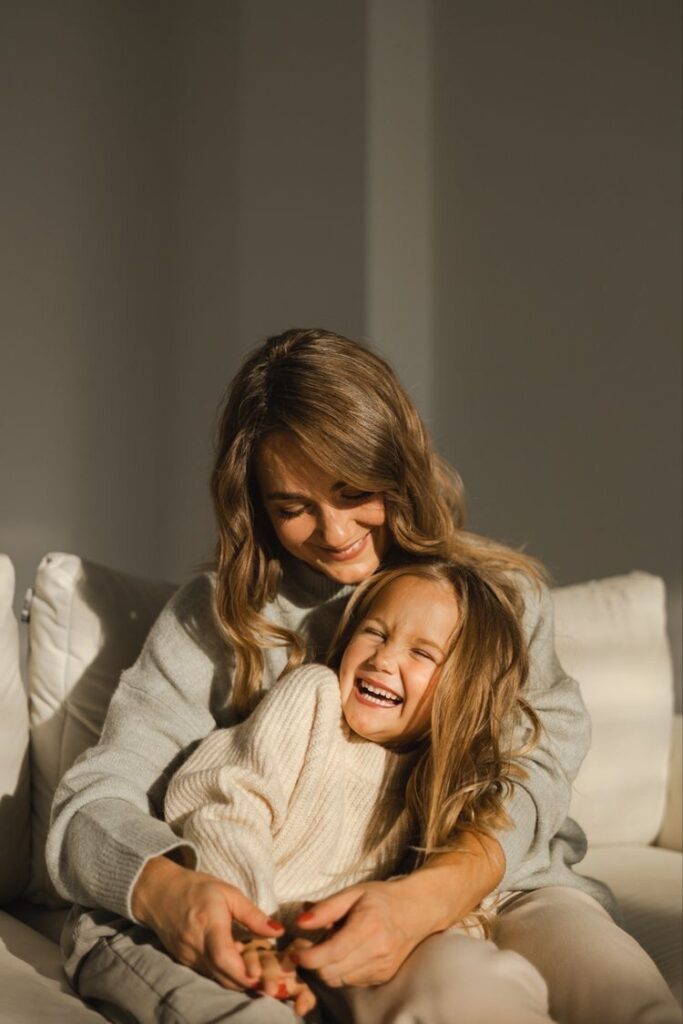
The second DIRFloortime® capacity is about engagement and relationships. Connection begins to go both ways. We look carefully: does the adult matter to the child as someone to be with, or mainly as someone who asks, helps, and says no?
A child may follow an instruction without being emotionally engaged. Conversely, they may avoid eye contact yet wait for the game to continue, listen to the adult’s voice, and return to them through movement or play. This distinction matters. At this capacity, we aim to support as many circles of mutual attention, shared interest, and enjoyment of connection as possible.
Parents often worry: “They don’t look at me, so there is no connection.” Practitioners may also focus on appearances: seating the child opposite them, obtaining eye contact, and getting a response. But connection is more than eye contact. For a neurodivergent child, looking someone in the eye may take too much effort, whereas a side-by-side position, moving together, or sharing interest in an object may make connection more accessible. We therefore ask: does the child notice the adult, wait, change their action in response, allow participation, or return to shared play?
What to observe
Signs of engagement may be small and easy to miss. The child slows down and becomes more attentive when the adult joins their rhythm and attunes to them. They glance back after a funny sound. They bring an object to continue an interaction rather than because they were asked. They restart an action because they anticipate the adult’s response: reciprocity is already present.
A child may protest but remain nearby, sufficiently regulated to stay in the relationship. They may smile over their shoulder rather than directly into the adult’s eyes. These small signals matter. If the adult waits only for speech, “correct” play, or sustained eye contact, they may miss the starting point for more complex interaction.
It helps to distinguish being emotionally engaged from simply completing a task. A child may complete a puzzle without noticing the adult, answer questions without sharing an experience, or repeat words without using them to connect. What helps here is for the adult to become part of something the child cares about, rather than offering more tasks.
What you can do
In DIRFloortime®, we enter through the child’s interest instead of immediately correcting what they are doing. If the child spins a lid or a toy car wheel, the adult first observes what holds their attention: rhythm, sound, movement, shine, or predictability. We can then join in: spin alongside them, slow down, add a pause, express surprise, offer another lid, or wait for a glance or movement requesting more. The interest becomes an entrance into a relationship rather than a reason to take away the “wrong” kind of play.
Once connection appears, small challenges can be added: change the rhythm slightly, hide the object for a second, make a funny pause, offer a choice, or gently vary a familiar script and see whether the child stays with you. This isn’t a test of ability. It explores whether the child can manage a little novelty within safe connection.
The adult uses emotion, or affect in DIRFloortime® terminology: intonation, facial expression, rhythm, pauses, and an expressive presence that does not overwhelm. This doesn’t mean entertaining the child at any cost. Loud excitement can be too much for some children. Good attunement may be quiet: a gentle voice, predictable repetition, a small surprise, or a pause before continuing. The aim is to make the adult’s signals understandable, emotionally readable, and inviting.
Parents can look for moments of shared experience: watching water pour, waiting for a toy car to roll down, repeating a funny sound, finding a shared rhythm, hiding and reappearing, or leaving a pause the child wants to fill. These moments are central to the work. Through them, the child experiences another person as part of an interesting world rather than someone who constantly tests them.
A common mistake
A common mistake is to turn the first sign of connection into a task. The child turns with interest, and the adult immediately asks, “What color? Say it. Look.” The child smiles and is immediately asked to repeat a word. Connection becomes a way to get the child to perform, and their interest can quickly fade.
Before the connection is stable, it has already been burdened with a test. At this capacity, shared enjoyment needs strengthening before complexity is added. This isn’t simply about entertainment: without experiencing another person as a meaningful partner, later capacities may look like learned routines that transfer poorly to daily life.
Progress is visible when the child returns to the adult more often, anticipates continuation, allows them into an interest, and begins to share an experience, however briefly. The child may not yet speak or play in the ways adults expect. But the foundation for later capacities is beginning to take shape.
Continue through the developmental capacities
- Functional Emotional Developmental Capacities in DIRFloortime®
- DIRFloortime® Capacity 1: Regulation, Co-Regulation, and Interest in the World
- DIRFloortime® Capacity 3: Two-Way Communication and Early Emotional Signals
Online DIR 101: preliminary registration
Preliminary registration is open for an introductory online DIR 101 course taught in Russian. Once we have a group of 5–6 people, we will find a time that works for everyone and schedule the course on the ICDL Institute (USA) website. Registering your interest does not commit you to paying.