
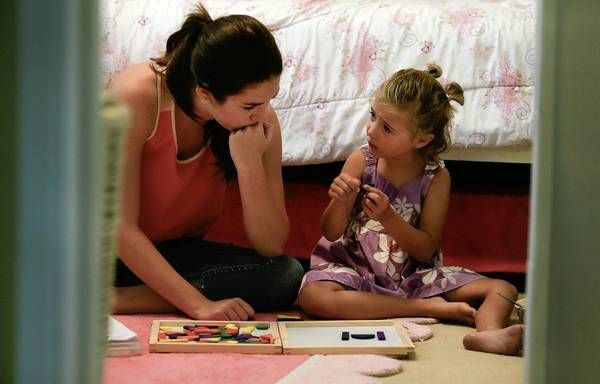
Sometimes parents hear about Floortime® and immediately think: one more thing to fit in. Set aside time. Get everything ready. Run a session. Make sure you do it right. The thought alone can feel heavy, because life with a neurodivergent child is often already full of demands. A parent can start to feel that their whole role is to teach and support their child’s development: an entire team of specialists rolled into one, with little room left to be a person.
Floortime® at home matters because development also happens in simple, everyday moments: familiar things we do together, with feeling and connection. It certainly doesn’t mean turning the family into a miniature therapy center. These interactions happen far beyond a specialist’s consulting room.
Floortime® can happen in very ordinary places: while getting dressed, washing hands, waiting for the elevator, carrying groceries, playing in the bath, packing a backpack, or walking down the street. Not every minute. Not perfectly. Not under the pressure of “I must develop my child all the time.” Instead, there are small moments when we can catch the child’s interest and make it a little more shared, with enjoyment on both sides. What matters are the principles and philosophy of Floortime.
The child reaches for a light switch: instead of only saying no, we might briefly turn it into a game of anticipation. “Turn it on? Now? Oh, it’s dark! And now it’s light!” A child loves water: we can join in pouring, adding a sound, a pause, a funny face, or a small choice. A child runs from wall to wall: sometimes our first task is to understand how the running helps them regulate and find a safe way to join that rhythm.
The purpose is not to turn every daily activity into a teaching marathon. It is to give the child more experiences of “someone can be with me,” “my interests are noticed,” “I can have an effect,” “we can do things together,” and “the other person responds as well as asks things of me.”
Floortime emphasizes a home program and natural relationships with parents, other close adults, and siblings. Parents are described as the main players in Floortime. Yes, parents have an important influence on the practitioner as well as the child. This matters. A specialist can help identify a direction, adjust the practice, and offer feedback. But a child’s most enduring relationships are often at home, and these can provide powerful support for development.
Floortime® at home should not become another source of guilt, exhaustion, or shame about the child. It is more helpful to think of it as a gentle practice of being present: repeating little by little, noticing a little more often, waiting a little longer, responding a little more warmly, and expanding the interaction a little more carefully.
Small doesn’t mean too little. A small, well-judged step can do more than an intensive push. Sometimes these little moments are exactly where a big change begins.
Online DIR 101: preliminary registration
Preliminary registration is open for an introductory online DIR 101 course taught in Russian. Once we have a group of 5–6 people, we will find a time that works for everyone and schedule the course on the ICDL Institute (USA) website. Registering your interest does not commit you to paying.